
'%3e%3cpath%20d='M15.1003%2043.5001C33.2091%2043.5001%2043.1166%2028.4935%2043.1166%2015.4838C43.1166%2015.062%2043.1072%2014.6307%2043.0884%2014.2088C45.0157%2012.815%2046.679%2011.0886%2048%209.11072C46.205%209.90932%2044.2993%2010.4309%2042.3478%2010.6576C44.4026%209.42594%2045.9411%207.49107%2046.6781%205.21166C44.7451%206.35724%2042.6312%207.16535%2040.4269%207.60134C38.9417%206.02324%2036.978%204.97835%2034.8394%204.62822C32.7008%204.27809%2030.5064%204.64222%2028.5955%205.66431C26.6846%206.68641%2025.1636%208.30953%2024.2677%2010.2827C23.3718%2012.256%2023.1509%2014.4694%2023.6391%2016.5807C19.725%2016.3843%2015.8959%2015.3675%2012.4%2013.5963C8.90405%2011.8251%205.81939%209.339%203.34594%206.29916C2.0888%208.46661%201.70411%2011.0314%202.27006%2013.4723C2.83601%2015.9132%204.31013%2018.047%206.39281%2019.4401C4.82926%2019.3905%203.29995%2018.9695%201.93125%2018.212V18.3338C1.92985%2020.6084%202.7162%2022.8133%204.15662%2024.5737C5.59704%2026.334%207.60265%2027.5412%209.8325%2027.9901C8.38411%2028.3864%206.86396%2028.4441%205.38969%2028.1588C6.01891%2030.115%207.24315%2031.8259%208.89154%2033.0528C10.5399%2034.2797%2012.5302%2034.9613%2014.5847%2035.0026C11.0968%2037.7423%206.78835%2039.2284%202.35313%2039.2213C1.56657%2039.2201%200.780798%2039.1719%200%2039.077C4.50571%2041.9676%209.74706%2043.5029%2015.1003%2043.5001Z'%20fill='%23F7F7F7'/%3e%3c/g%3e%3cdefs%3e%3cclipPath%20id='clip0'%3e%3crect%20width='48'%20height='48'%20fill='white'/%3e%3c/clipPath%3e%3c/defs%3e%3c/svg%3e)


3D printing has moved well beyond prototyping. Businesses now use additive manufacturing to produce end-use parts for aerospace brackets, medical implants, consumer goods, and industrial tooling. According to the Wohlers Report 2026, global additive manufacturing revenues reached $24.2 billion in 2025, a 10.9% increase over the previous year, with the services segment growing at 15.5%. Grand View Research projects the broader 3D printing market will hit $168.93 billion by 2033, expanding at a CAGR of 23.9%. The opportunity is enormous, but selling custom 3D-printed parts online remains surprisingly difficult without the right tooling.
This article explains why product configurators are becoming essential for 3D printing businesses, how they work under the hood, and what it takes to connect a customer's browser-based design to a production-ready print file.
The Challenge of Selling Custom 3D-Printed Parts Online
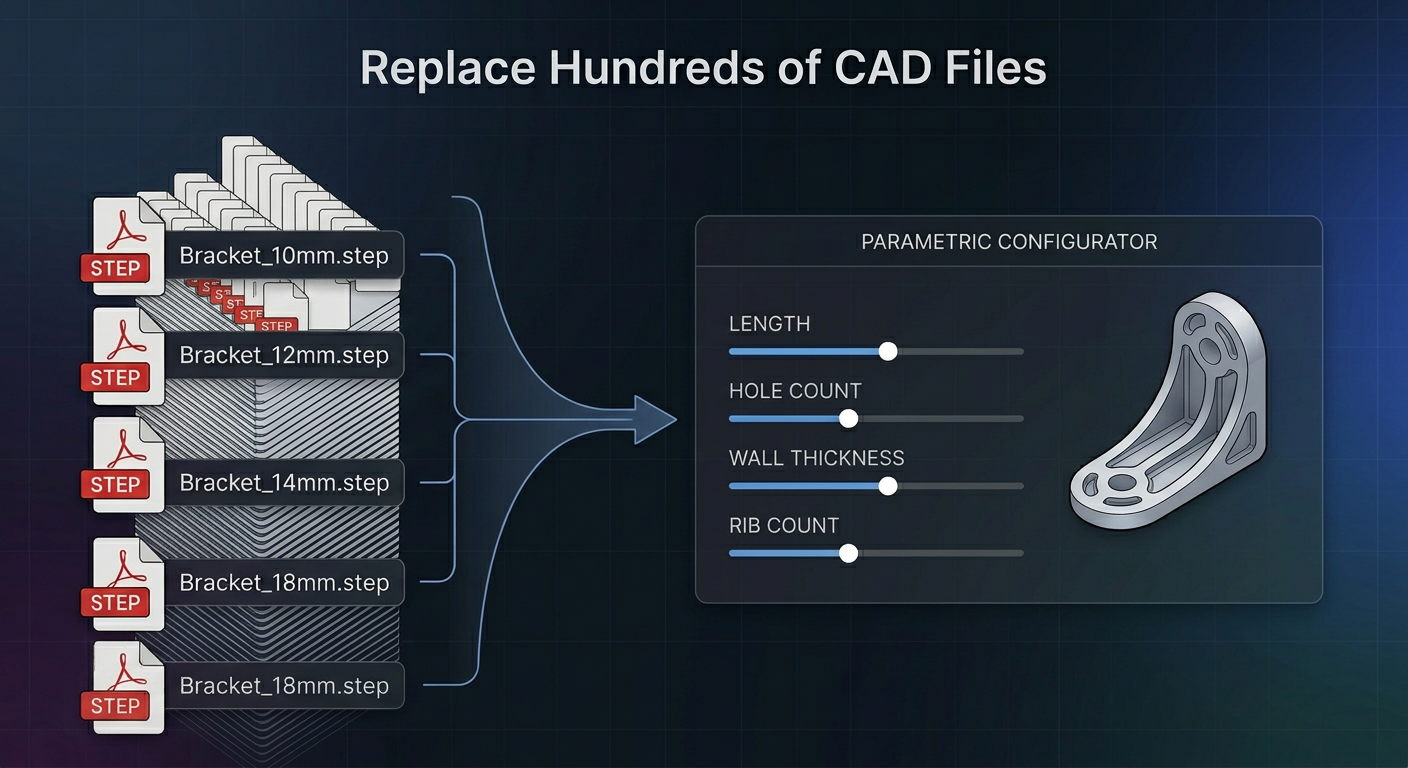
Unlike standard ecommerce where a customer picks a SKU and checks out, 3D printing is inherently parametric. Every part can vary in dimensions, wall thickness, infill percentage, material choice, and post-processing finish. A single bracket design might have hundreds of valid configurations, each with a different print time, material cost, and structural performance.
Most 3D printing service bureaus still handle this complexity manually. A customer uploads an STL file, a sales engineer reviews the geometry, selects the optimal orientation, estimates print time, and returns a quote by email, often within 24 to 48 hours. That lag kills conversions. Fortune Business Insights notes that while demand for on-demand custom parts is accelerating, many providers struggle to scale because their quoting workflows remain manual and labour-intensive.
The friction compounds when customers lack CAD expertise. Not every buyer can produce a valid STL. Some need to adjust an existing design, choosing between different mounting hole patterns, thicknesses, or connector types. Without a visual interface, those customers either abandon the purchase or flood support channels with specification questions. Research from Customcy shows that roughly 70% of consumers now prefer customised products over standard alternatives, and one in five will pay up to a 20% premium for personalisation, yet the tools to deliver that customisation in 3D printing lag behind consumer expectations.
How Product Configurators Solve the Problem
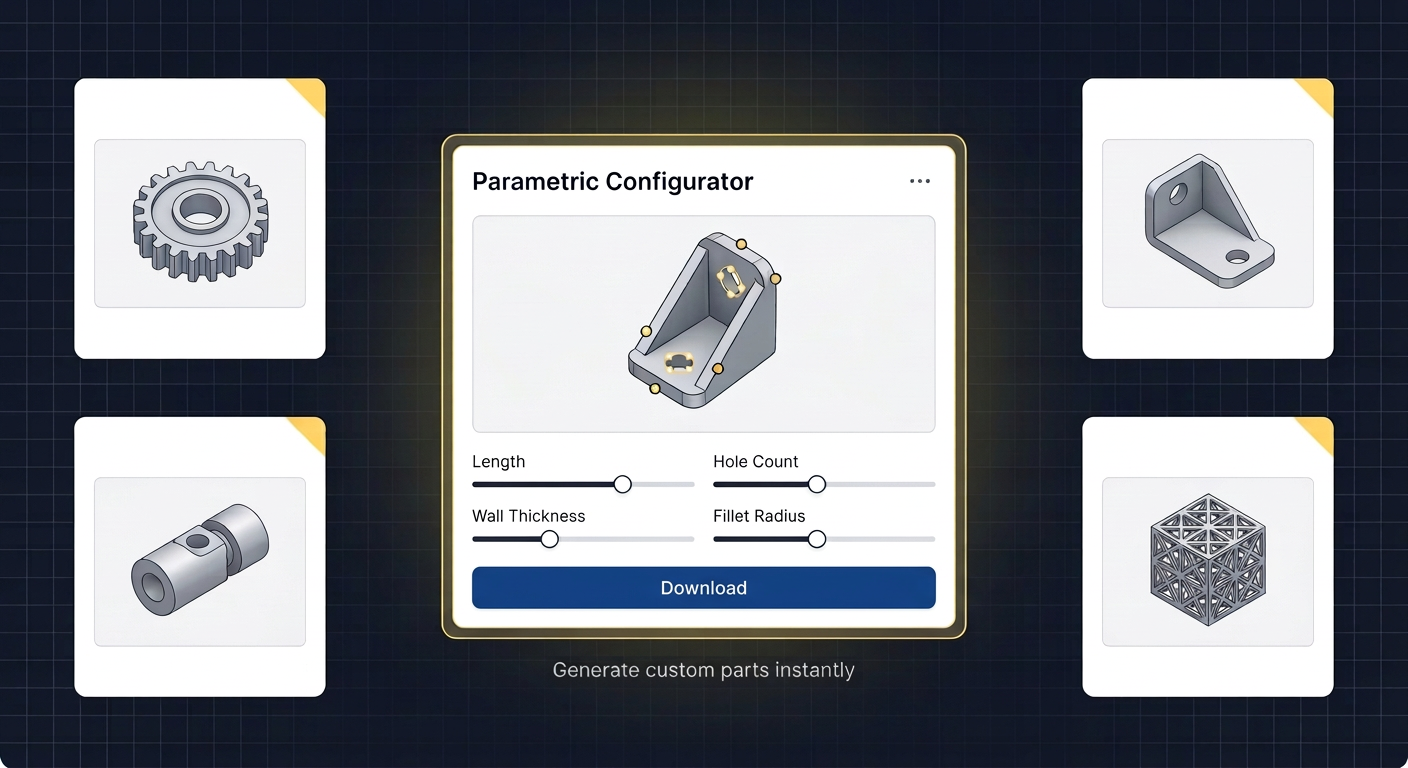
A product configurator replaces the manual quote-and-revise cycle with a self-service design tool embedded in your storefront. For 3D printing, the configurator presents a parametric 3D model that customers manipulate directly:
- Parametric dimension control: Customers adjust height, width, depth, wall thickness, and feature positions using sliders or numeric inputs. The 3D model updates in real time, and built-in rules prevent configurations that violate printability constraints such as minimum wall thickness or maximum build volume.
- Material and process selection: Toggle between PLA, ABS, PETG, nylon, resin, or metal sintering. Each material carries its own cost-per-gram, minimum feature size, and surface finish properties, all reflected instantly in the preview and price.
- Infill and structural options: Let customers choose infill density (e.g. 20%, 50%, 100%) and pattern (grid, gyroid, honeycomb), directly affecting part weight, strength, and cost.
- Real-time pricing: As every parameter changes, the configurator recalculates price based on material volume, print time estimates, and post-processing requirements. No waiting for a manual quote. For a deeper look at how this works, see our guide on real-time pricing in product configurators.
The result is that a customer who once needed CAD skills and a 48-hour quoting cycle can now design, validate, and order a custom part in minutes.
According to Jabil, 72% of companies already produce personalised items on demand via 3D printing, and 79% of industry leaders expect their usage of additive manufacturing to more than double in the coming years. Configurators are the interface that makes this scale possible.
Automatic File Output: From Browser to Print Bed
Visualisation and pricing are only half the story. The critical differentiator for 3D printing configurators is production-ready file generation. When a customer finalises their design, the underlying parametric engine automatically exports:
- STL files: The industry-standard mesh format accepted by virtually every slicer and print farm management system.
- 3MF files: The modern replacement for STL that embeds colour, material, and build-plate orientation metadata in a single package, reducing errors when transferring to production.
- STEP files: Solid-model geometry for customers who need to integrate the part into larger CAD assemblies or require CNC post-machining on critical surfaces.
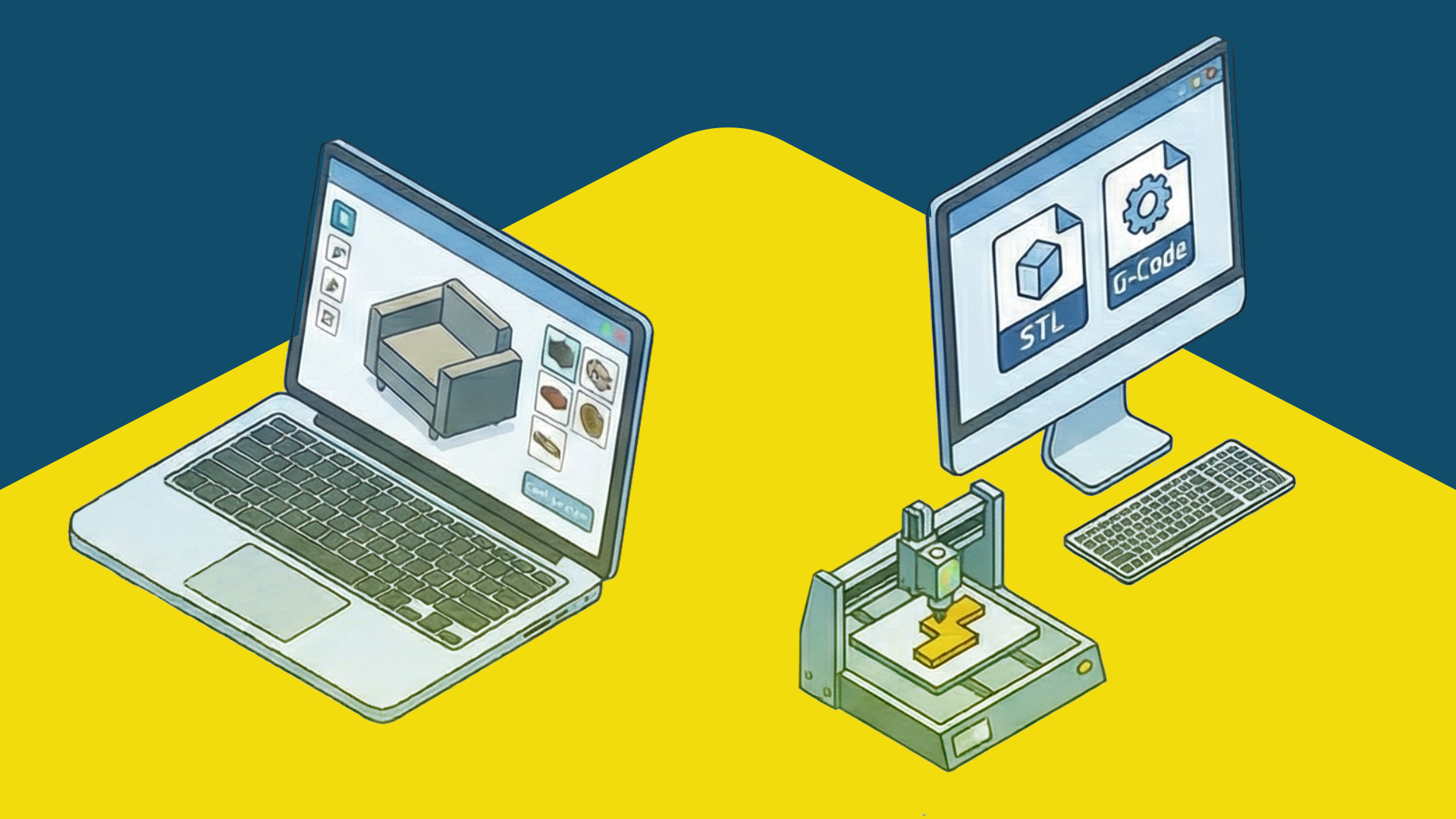
This design-to-fabrication pipeline eliminates the manual file preparation that typically sits between order placement and production start. No engineer needs to re-model the part. No back-and-forth with the customer over ambiguous specifications. The file that arrives at the print farm is the exact geometry the customer approved on screen.
The Role of BeeGraphy's Parametric Engine
Building a parametric configurator from scratch requires deep expertise in computational geometry, constraint solvers, and real-time 3D rendering. Most 3D printing businesses do not have that engineering bandwidth, nor should they need to.
Configurator.tech, powered by BeeGraphy's parametric engine, provides the infrastructure. BeeGraphy's core technology treats every product as a parametric model: a set of geometric relationships, dimensional constraints, and material properties that respond dynamically to user input. For 3D printing workflows, this means:
- Constraint enforcement: The engine validates every configuration against printability rules, minimum wall thickness, maximum overhang angle, build volume limits, ensuring that only manufacturable designs reach production.
- Multi-format export: STL, 3MF, and STEP files are generated server-side from the parametric model, not approximated from a screen mesh. The output is production-grade geometry.
- Volume-based pricing logic: Pricing formulas can reference material volume, bounding-box dimensions, support structure estimates, and post-processing steps, giving customers accurate quotes without manual calculation.
- Embeddable interface: The configurator runs as an embeddable widget on any website, Shopify store, or WooCommerce shop, requiring no custom front-end development.
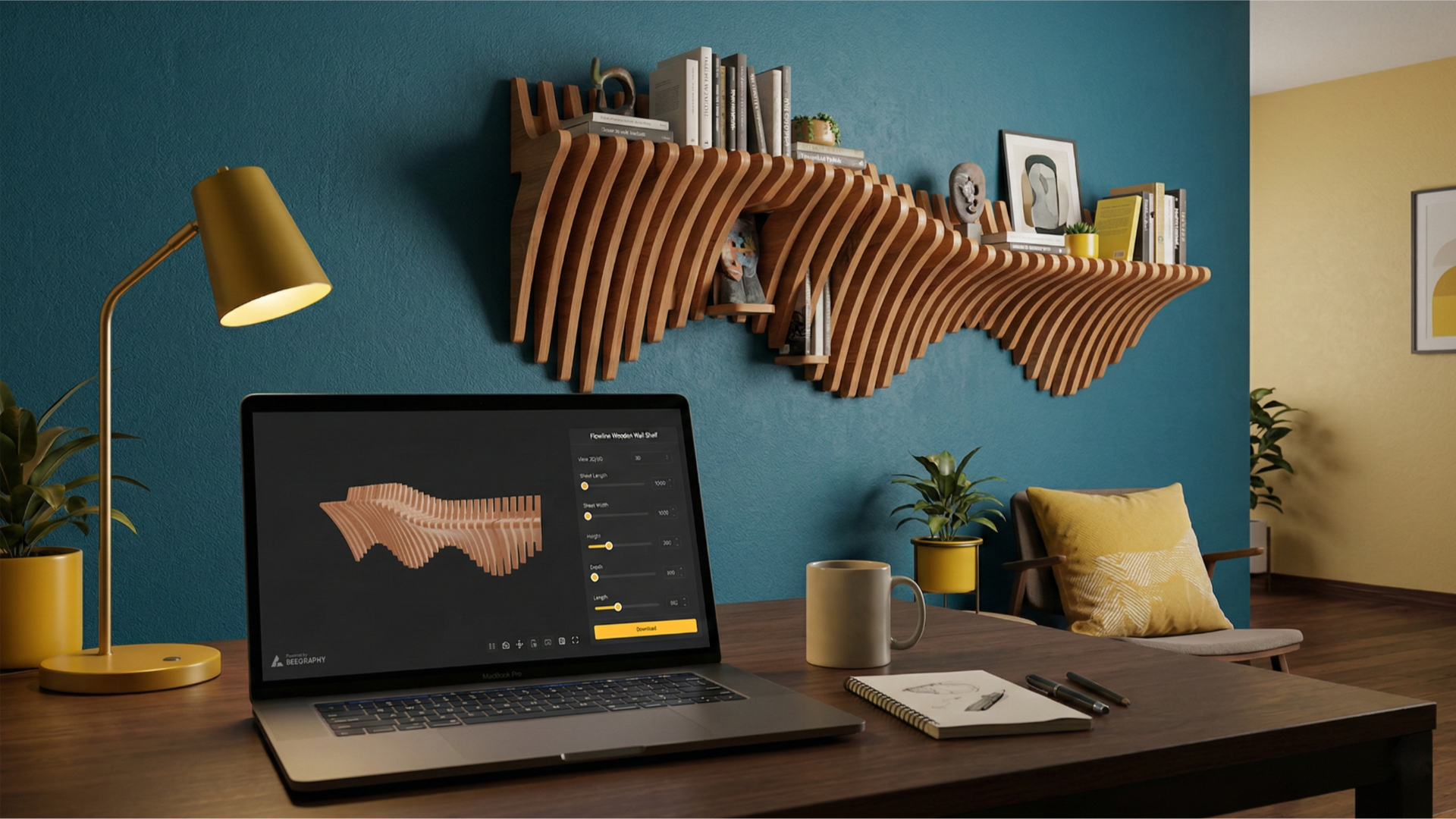
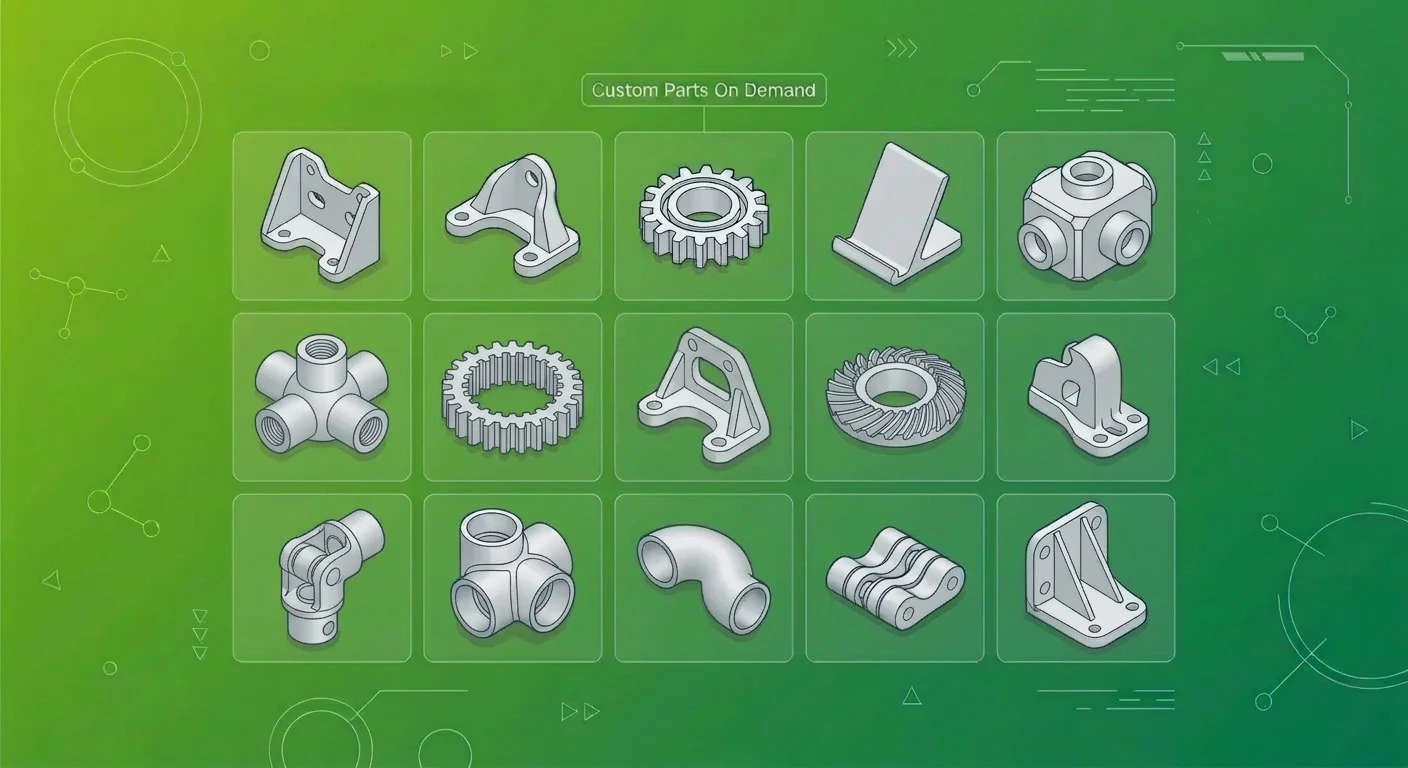
The prebuilt configurator library includes templates for common 3D-printed product categories, from enclosures and brackets to decorative objects, so businesses can launch in days rather than months.
Serving the 3D Printing Market at Scale
The 3D printing industries page on Configurator.tech is purpose-built for additive manufacturing businesses. Whether you operate a print farm fulfilling custom orders, a product brand selling configurable consumer goods, or an engineering services company offering bespoke industrial components, the platform adapts to your workflow.
Market.us reports that nearly 37 million consumer product parts were 3D printed in 2023 alone, a 23% increase over the previous year. As volumes grow, the bottleneck shifts from printing capacity to order intake and quoting efficiency. Configurators remove that bottleneck by letting customers self-serve the entire design-to-order process.
The business impact is measurable. Brands using 3D configurators report higher conversion rates because customers gain confidence from seeing exactly what they will receive. Return rates drop because the visual preview eliminates the "it looked different online" problem. And average order values rise because customers can explore premium materials and options without waiting for a revised quote. Similar results have been documented across industries, from custom furniture to industrial components.
Getting Started
Launching a 3D printing configurator does not require a lengthy development project. The fastest path is:
- Select a template from the configurator library that matches your product category, or upload your own parametric model.
- Define parameters — dimension ranges, material options, infill choices, and pricing rules — through the visual editor.
- Set printability constraints so the configurator only produces valid, manufacturable geometry.
- Embed the configurator on your storefront and connect file exports to your slicer or print management system.
From there, monitor which configurations customers explore most, refine your material offerings, and expand into new product lines, all without rebuilding the underlying technology.
The 3D printing market is growing at double-digit rates, and customer expectations for instant customisation are rising even faster. Businesses that offer a self-service configurator will capture more orders, quote faster, and eliminate the manual overhead that currently limits scale. A product configurator is no longer a nice-to-have for 3D printing companies. It is the interface between customer intent and the print bed.
Ready to bring your 3D printing catalogue online? View pricing details or contact Configurator.tech to start building your first configurator today.