
'%3e%3cpath%20d='M15.1003%2043.5001C33.2091%2043.5001%2043.1166%2028.4935%2043.1166%2015.4838C43.1166%2015.062%2043.1072%2014.6307%2043.0884%2014.2088C45.0157%2012.815%2046.679%2011.0886%2048%209.11072C46.205%209.90932%2044.2993%2010.4309%2042.3478%2010.6576C44.4026%209.42594%2045.9411%207.49107%2046.6781%205.21166C44.7451%206.35724%2042.6312%207.16535%2040.4269%207.60134C38.9417%206.02324%2036.978%204.97835%2034.8394%204.62822C32.7008%204.27809%2030.5064%204.64222%2028.5955%205.66431C26.6846%206.68641%2025.1636%208.30953%2024.2677%2010.2827C23.3718%2012.256%2023.1509%2014.4694%2023.6391%2016.5807C19.725%2016.3843%2015.8959%2015.3675%2012.4%2013.5963C8.90405%2011.8251%205.81939%209.339%203.34594%206.29916C2.0888%208.46661%201.70411%2011.0314%202.27006%2013.4723C2.83601%2015.9132%204.31013%2018.047%206.39281%2019.4401C4.82926%2019.3905%203.29995%2018.9695%201.93125%2018.212V18.3338C1.92985%2020.6084%202.7162%2022.8133%204.15662%2024.5737C5.59704%2026.334%207.60265%2027.5412%209.8325%2027.9901C8.38411%2028.3864%206.86396%2028.4441%205.38969%2028.1588C6.01891%2030.115%207.24315%2031.8259%208.89154%2033.0528C10.5399%2034.2797%2012.5302%2034.9613%2014.5847%2035.0026C11.0968%2037.7423%206.78835%2039.2284%202.35313%2039.2213C1.56657%2039.2201%200.780798%2039.1719%200%2039.077C4.50571%2041.9676%209.74706%2043.5029%2015.1003%2043.5001Z'%20fill='%23F7F7F7'/%3e%3c/g%3e%3cdefs%3e%3cclipPath%20id='clip0'%3e%3crect%20width='48'%20height='48'%20fill='white'/%3e%3c/clipPath%3e%3c/defs%3e%3c/svg%3e)


Manufacturing waste is one of the largest and most persistent problems in global industry. According to World Bank estimates, approximately 9.2 billion tonnes of industrial waste are generated worldwide every year. In the United States alone, hundreds of millions of metric tons of non-hazardous industrial solid waste are produced annually, much of it from overproduction, material scrap, and manufacturing errors. For companies producing custom or configurable products, the problem is even more acute: every misinterpreted order, every incorrect dimension, and every wrong material selection generates waste that could have been prevented.
The question is no longer whether manufacturers can afford to address waste. It is whether they can afford not to. Product configurators are emerging as one of the most effective tools for tackling manufacturing waste at its source, not by managing waste after it is created, but by preventing it from being created in the first place.
The Hidden Cost of Traditional Workflows
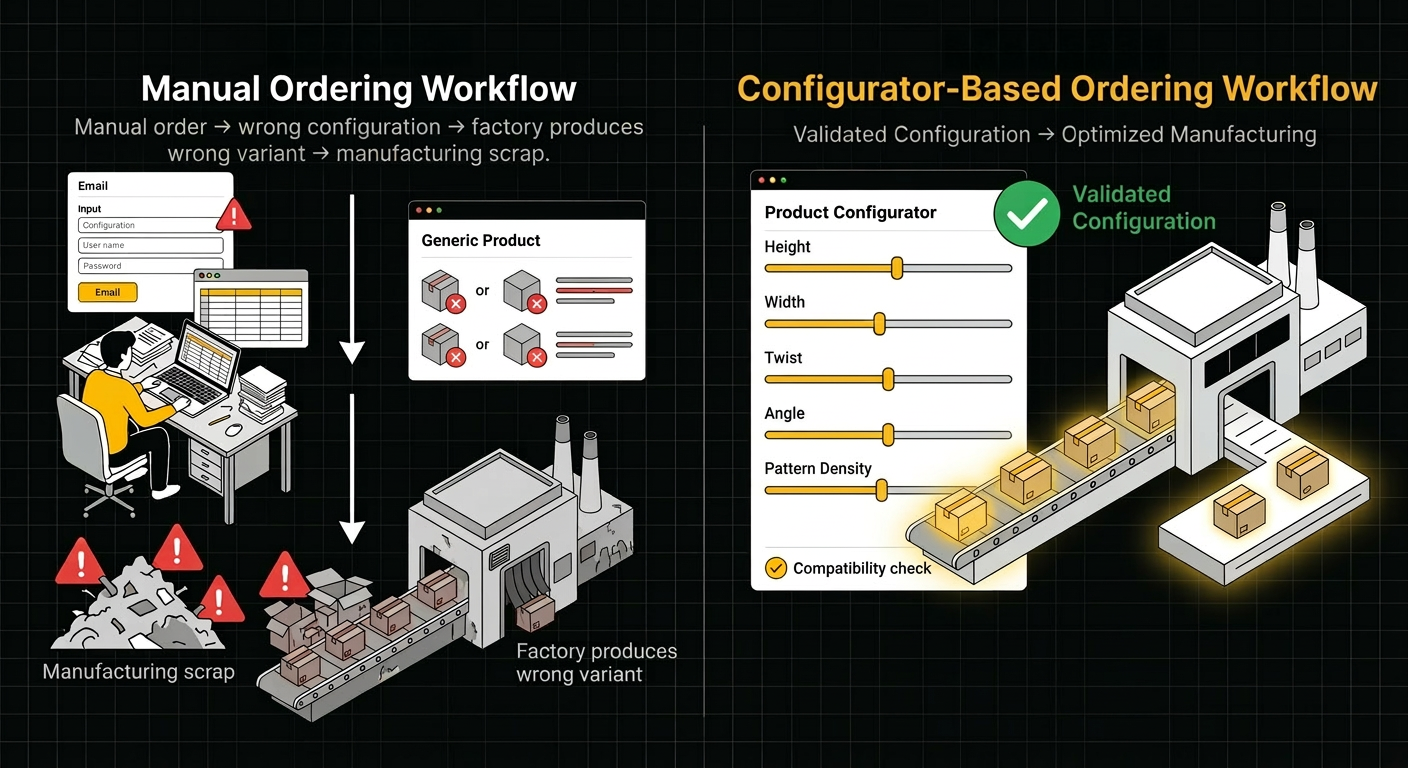
In a conventional custom manufacturing workflow, a customer describes what they want, a salesperson interprets that description, a designer translates it into technical specifications, and a production planner converts those specifications into material orders and cutting instructions. Each handoff is a potential failure point. Research shows that human error accounts for 5 to 30 percent of total manufacturing expenses through scrap and rework alone. Most established manufacturing operations aim for scrap rates under 5 percent, yet many custom manufacturers operate well above that threshold due to the complexity of one-off orders.
Consider the typical failure modes. A salesperson records dimensions in inches when the shop floor works in millimetres. A designer selects the wrong grade of steel because the customer's email was ambiguous. A production planner over-orders raw materials to hedge against uncertainty, leaving surplus stock that eventually becomes waste. A completed product ships to the customer, but the finish colour is wrong because the order form used a generic name instead of a supplier code. Each of these scenarios generates physical waste: scrap material, wasted energy, wasted labour, and often a returned product that cannot be resold.
Companies processing around 300 new items per month with approximately 150 BOM updates typically encounter roughly 45 mistakes per month, translating to over $100,000 in annual costs. For businesses selling custom furniture, staircases, doors, or 3D-printed products, where every order is unique, these figures compound rapidly.
How Configurators Eliminate Waste at the Source
A well-built product configurator does not just help customers visualise what they are buying. It encodes manufacturing logic directly into the configuration process, ensuring that every order is valid, producible, and fully specified before it ever reaches the shop floor. This eliminates the most common sources of waste in custom manufacturing.
Accurate Bills of Materials. When a customer configures a product, the configurator automatically generates a precise BOM listing every component, material, and quantity required. There is no manual interpretation, no spreadsheet re-entry, and no ambiguity about what was ordered. As detailed in our guide on design-to-fabrication automation, this single change can reduce manufacturing errors by up to 90 percent.
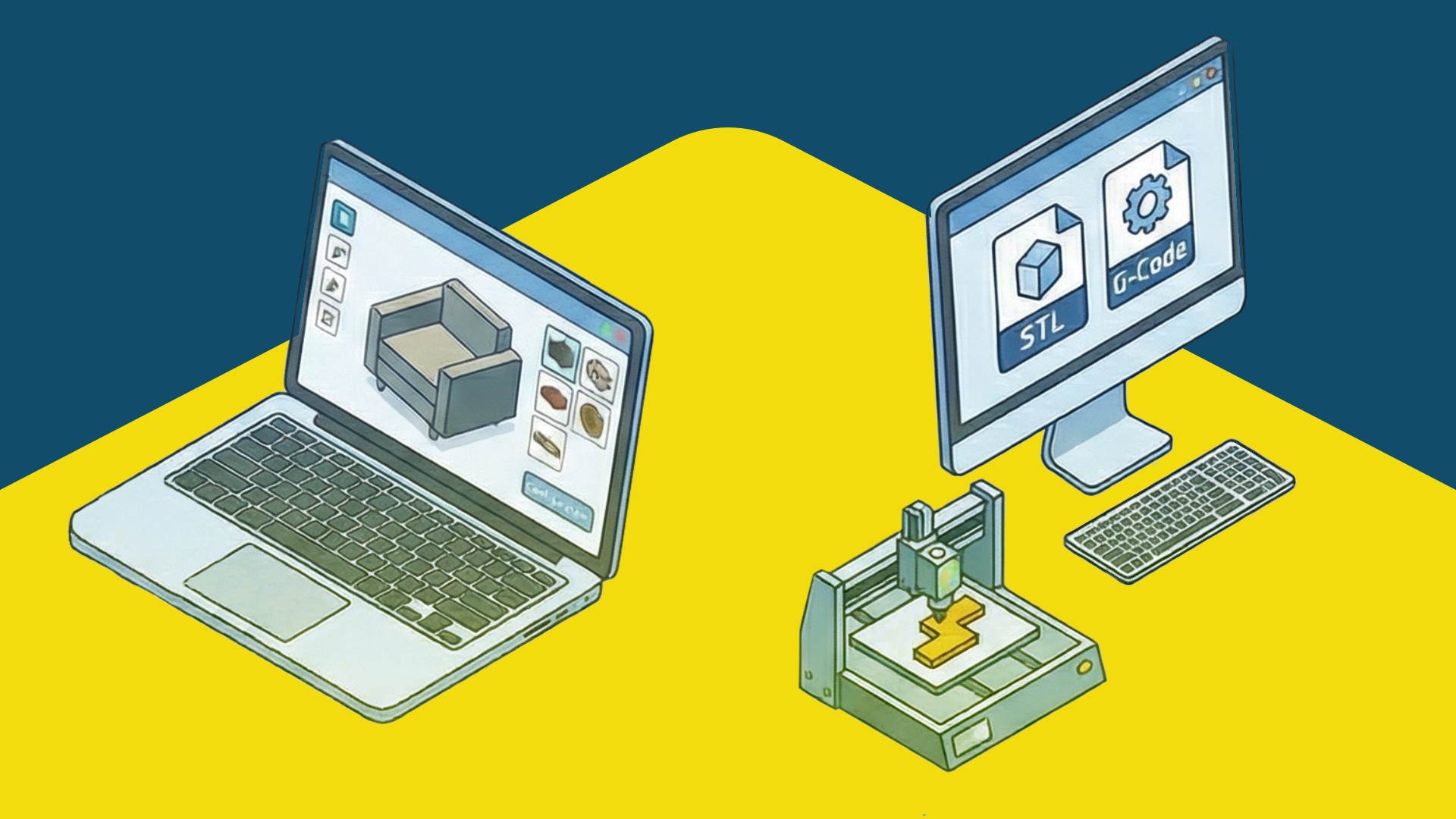
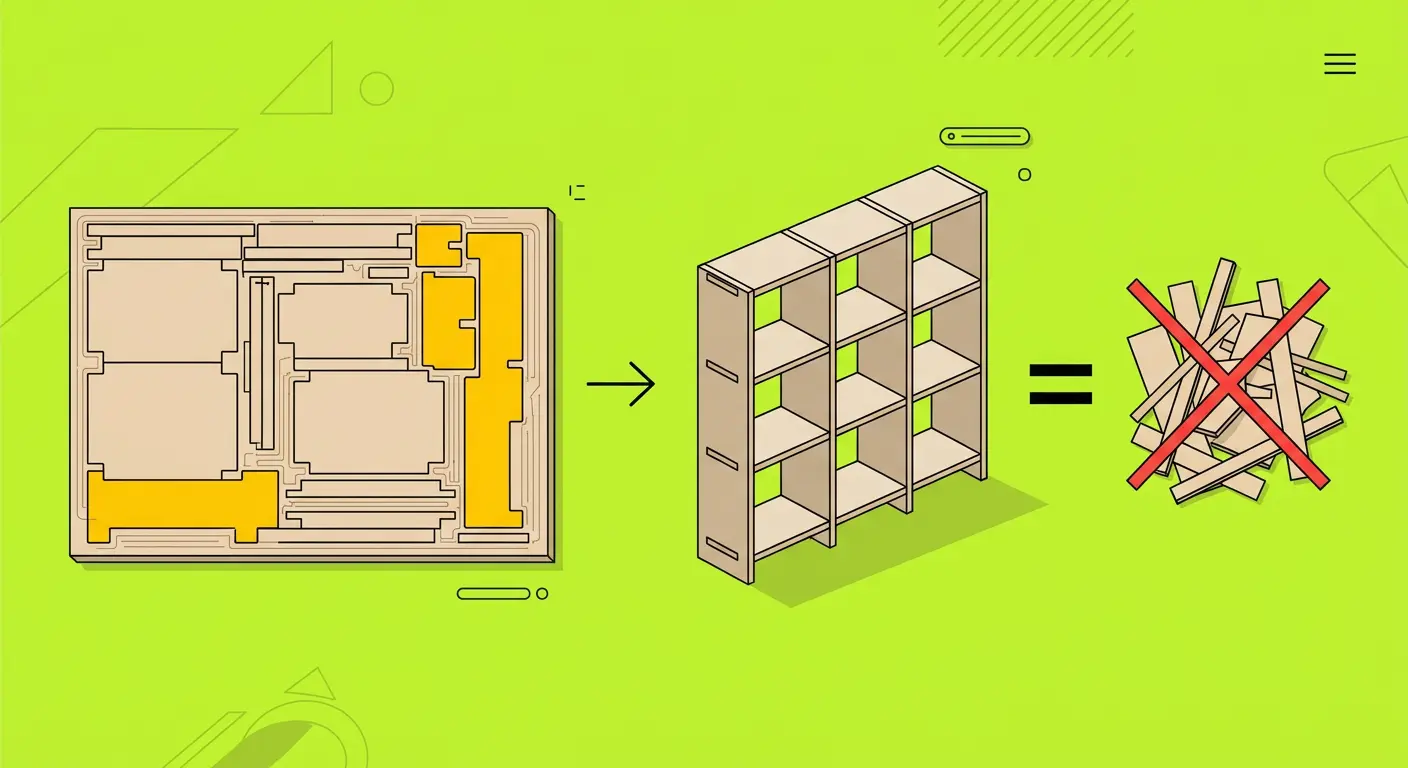
Precise cut lists and production files. Instead of a designer manually translating customer choices into DXF files or cutting instructions, the configurator generates production-ready output directly from the parametric model. This is particularly impactful for industries like custom furniture manufacturing, where every panel, rail, and joint must be cut to exact specifications. No over-cutting, no trial-and-error fitting, no scrap from dimensional errors.
Validated configurations. A configurator enforces manufacturing constraints in real time. If a material cannot be used with a particular finish, the customer cannot select that combination. If a dimension exceeds structural limits, the configurator flags it before the order is placed. This prevents the production of items that would fail quality checks and end up as waste.
Make-to-order instead of make-to-stock. Configurators enable a true make-to-order workflow, where nothing is produced until a customer has specified and confirmed exactly what they want. This eliminates the overproduction inherent in make-to-stock models, where manufacturers produce inventory based on demand forecasts that are frequently wrong. Make-to-order strategies reduce waste by producing only what is needed, eliminating the risk of products becoming obsolete, damaged, or unsellable in storage. With real-time pricing built into the configurator, customers receive instant, accurate quotes that reflect actual material and labour costs, further reducing the likelihood of order changes or cancellations downstream.
The Sustainability Impact
The environmental benefits of eliminating manufacturing waste extend far beyond the factory floor. Every kilogram of raw material that is not wasted represents energy that was not consumed in extraction, processing, and transportation. Every product that ships correctly the first time eliminates the carbon footprint of a return shipment.
The scale of returns-related waste is staggering. According to research from Optoro, e-commerce returns alone generate up to 24 million metric tons of CO2 emissions per year, and companies sent over 9.5 billion pounds of returned products to landfills in 2022 alone. For custom and personalised products, returns are particularly damaging because the items often cannot be resold. As we explored in our article on reducing returns on personalised products, configurators that give customers an accurate preview of exactly what they will receive dramatically reduce return rates, cutting both financial and environmental costs.
Reduced raw material consumption is another major benefit. When a configurator generates a precise cut list, manufacturers order exactly what they need rather than adding a buffer for errors. Over hundreds or thousands of orders, the cumulative material savings are substantial. A metal fabrication shop that switched to higher-precision production data reported a 15 percent reduction in scrap within three months. Across an entire industry, this translates to thousands of tonnes of raw materials preserved annually.
There is also the less visible impact of transportation waste. Products manufactured incorrectly must be shipped back, reworked, and reshipped, doubling or tripling the transportation emissions associated with a single order. Online shopping already generates 4.8 times more packaging waste than brick-and-mortar stores. Eliminating errors at the point of configuration prevents this entire chain of wasteful activity.
How BeeGraphy's Parametric Engine Generates Exact Material Requirements
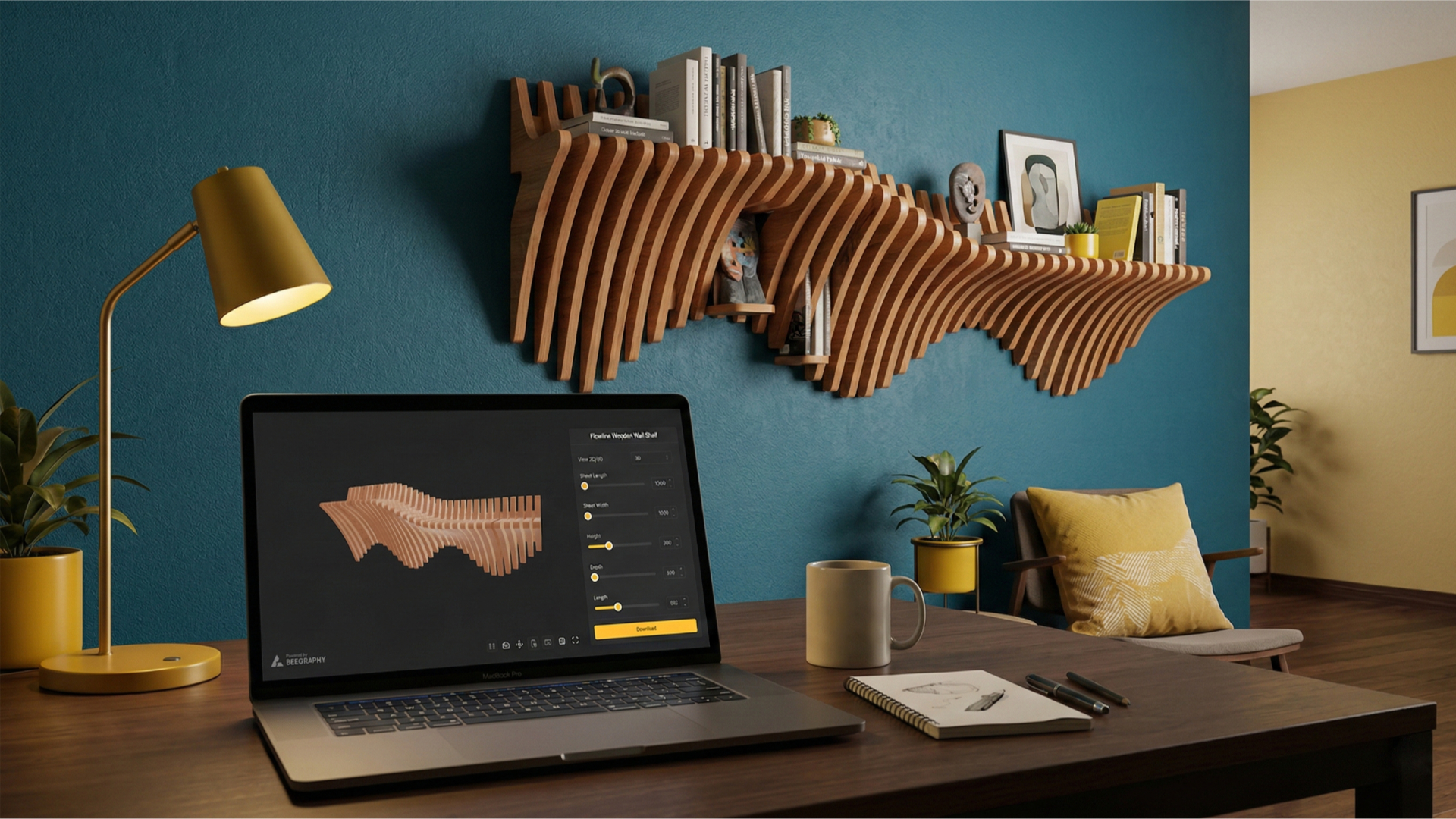
Configurator.tech, powered by BeeGraphy's computational design engine, takes waste reduction further than traditional configurator platforms. Rather than working from a fixed product catalogue with predefined options, BeeGraphy uses a node-based parametric architecture where the product model itself contains complete manufacturing intelligence.
Three types of nodes work together to ensure precision:
- Geometry nodes define the exact 3D shape and structure of the product, updating in real time as parameters change. Every dimensional adjustment is reflected immediately, so there is never a discrepancy between what was configured and what needs to be produced.
- Material nodes link every geometric element to specific materials, automatically calculating exact quantities, costs, and supplier references. When a customer changes from oak to walnut, the material requirements, costs, and cutting parameters update instantly.
- Service nodes define manufacturing operations tied to each component, from CNC routing to powder coating, generating accurate labour and machine-time estimates that prevent over-scheduling and wasted production capacity.
When a customer finalises a configuration, all three node types resolve simultaneously, producing a complete bill of materials, bill of services, and set of production files in a single step. The result is that every order arrives at the shop floor with exactly the data needed to produce it correctly the first time. No interpretation, no re-entry, no margin for waste-generating errors.
This approach is already proving its value across multiple industries. Furniture manufacturers use it to generate precise panel cut lists that minimise offcuts. 3D printing businesses use it to calculate exact material volumes for each print job. Companies offering complex configurable products use it to eliminate the engineering bottleneck that traditionally sits between sales and production, reducing lead times and preventing the errors that create waste.
Moving Toward Zero-Waste Manufacturing
Manufacturing waste is not an inevitable by-product of custom production. It is a symptom of disconnected systems, manual handoffs, and imprecise data. Product configurators address all three by creating a single, unbroken data pipeline from customer configuration to factory output. Configuration systems reduce manufacturing errors by up to 90 percent and improve profit margins by 3 to 8 percent, not by adding complexity but by removing the human error that complexity introduces.
For manufacturers serious about sustainability, the configurator is not optional. It is the foundation. Every order produced correctly the first time is material saved, energy preserved, and carbon not emitted. Every return prevented is packaging not consumed and transportation not burned. The compounding effect across thousands of orders is transformative.
If your business is still relying on manual order interpretation, spreadsheet-based BOMs, or make-to-stock production models, the waste embedded in your process is costing you more than you realise. Explore our prebuilt configurators to see how parametric automation works in practice, or get in touch with our team to discuss how a configurator can reduce waste in your specific workflow. You can also read our complete guide to product configurators for a broader overview of what this technology can do for your business.