
'%3e%3cpath%20d='M15.1003%2043.5001C33.2091%2043.5001%2043.1166%2028.4935%2043.1166%2015.4838C43.1166%2015.062%2043.1072%2014.6307%2043.0884%2014.2088C45.0157%2012.815%2046.679%2011.0886%2048%209.11072C46.205%209.90932%2044.2993%2010.4309%2042.3478%2010.6576C44.4026%209.42594%2045.9411%207.49107%2046.6781%205.21166C44.7451%206.35724%2042.6312%207.16535%2040.4269%207.60134C38.9417%206.02324%2036.978%204.97835%2034.8394%204.62822C32.7008%204.27809%2030.5064%204.64222%2028.5955%205.66431C26.6846%206.68641%2025.1636%208.30953%2024.2677%2010.2827C23.3718%2012.256%2023.1509%2014.4694%2023.6391%2016.5807C19.725%2016.3843%2015.8959%2015.3675%2012.4%2013.5963C8.90405%2011.8251%205.81939%209.339%203.34594%206.29916C2.0888%208.46661%201.70411%2011.0314%202.27006%2013.4723C2.83601%2015.9132%204.31013%2018.047%206.39281%2019.4401C4.82926%2019.3905%203.29995%2018.9695%201.93125%2018.212V18.3338C1.92985%2020.6084%202.7162%2022.8133%204.15662%2024.5737C5.59704%2026.334%207.60265%2027.5412%209.8325%2027.9901C8.38411%2028.3864%206.86396%2028.4441%205.38969%2028.1588C6.01891%2030.115%207.24315%2031.8259%208.89154%2033.0528C10.5399%2034.2797%2012.5302%2034.9613%2014.5847%2035.0026C11.0968%2037.7423%206.78835%2039.2284%202.35313%2039.2213C1.56657%2039.2201%200.780798%2039.1719%200%2039.077C4.50571%2041.9676%209.74706%2043.5029%2015.1003%2043.5001Z'%20fill='%23F7F7F7'/%3e%3c/g%3e%3cdefs%3e%3cclipPath%20id='clip0'%3e%3crect%20width='48'%20height='48'%20fill='white'/%3e%3c/clipPath%3e%3c/defs%3e%3c/svg%3e)


Today's customers do not shop in a single channel. They browse on their phones, compare on a laptop, visit a showroom, and circle back to a marketplace to buy. A landmark Harvard Business Review study of 46,000 shoppers found that 73% used multiple channels during their purchase journey, and those omnichannel customers spent an average of 4% more in-store and 10% more online than single-channel shoppers. McKinsey's research reinforces this: companies with strong omnichannel engagement retain 89% of their customers compared to just 33% for those with weak cross-channel presence. The message is clear — brands that meet customers wherever they shop win more business and keep it longer.
For companies selling customizable products, the omnichannel imperative is even more pressing. A product configurator is the core of the buying experience. If that configurator only lives on your direct website, you are invisible on every other channel where your customers are actively shopping. Worse, if you have built separate configurator implementations for each channel — one for your website, another plugin for Shopify, a different tool for your sales team — you are managing duplicated systems, inconsistent pricing, and fragmented customer data. There is a better way.
The Problem with Channel-Specific Configurators
Many brands fall into the trap of building or buying separate configuration tools for each sales channel. The website gets a custom-built 3D configurator. The Shopify store uses a Shopify-specific app with limited customization options. The sales team works from spreadsheets or a legacy CPQ tool. The in-store experience might be a static catalog or, at best, a tablet running yet another application.
This patchwork approach creates real problems. Product rules and pricing logic must be maintained in multiple systems, and they inevitably drift out of sync. A material option that is discontinued gets removed from the website configurator but remains available in the Shopify app for weeks. A price increase rolls out to the sales team's quoting tool but misses the WooCommerce store. Customers who start configuring a product on one channel cannot continue on another. Every inconsistency erodes trust, generates support tickets, and costs revenue.
The maintenance burden alone is staggering. Engineering teams spend time updating the same product rules across three or four platforms instead of building new features. Marketing cannot run a unified promotion because each channel has different capabilities. Analytics are siloed, making it impossible to understand the full customer journey or identify which product configurations are trending across all channels.
Build Once, Deploy Everywhere
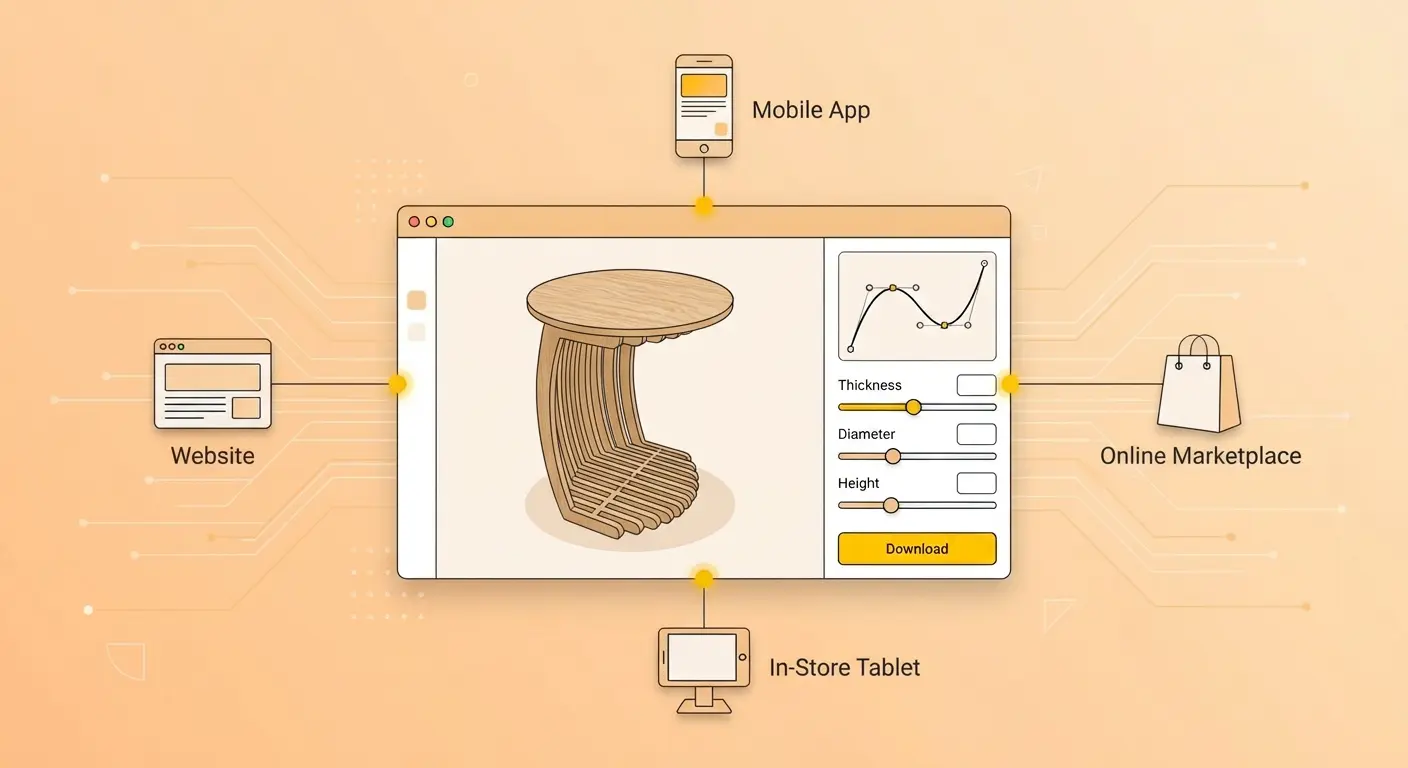
The solution is an embeddable product configurator — a single configuration engine that can be deployed as a widget or iframe on any platform, any website, and any device. You build your configurator once, defining all product rules, pricing logic, materials, and visual assets in a single system. Then you embed it wherever your customers are: your direct website, your Shopify storefront, your WooCommerce catalog, a Squarespace landing page, an Etsy listing, a sales team's quoting interface, or an in-store kiosk.
Because every channel runs the same configurator instance, product rules are always consistent. A price change propagates instantly to every touchpoint. A new material option appears simultaneously on your website, your marketplace listings, and your sales team's tools. Configuration data flows into a single analytics dashboard, giving you a complete picture of customer behavior across all channels. This is what true omnichannel product configuration looks like.
Channel-by-Channel: How Embeddable Configurators Work Everywhere
The power of an embeddable configurator lies in its versatility. Here is how a single configurator serves every major sales channel:
- Direct website: Embed the configurator natively on your product pages with full branding control. This is your flagship experience — high-resolution 3D visualization, complete option sets, and seamless checkout integration.
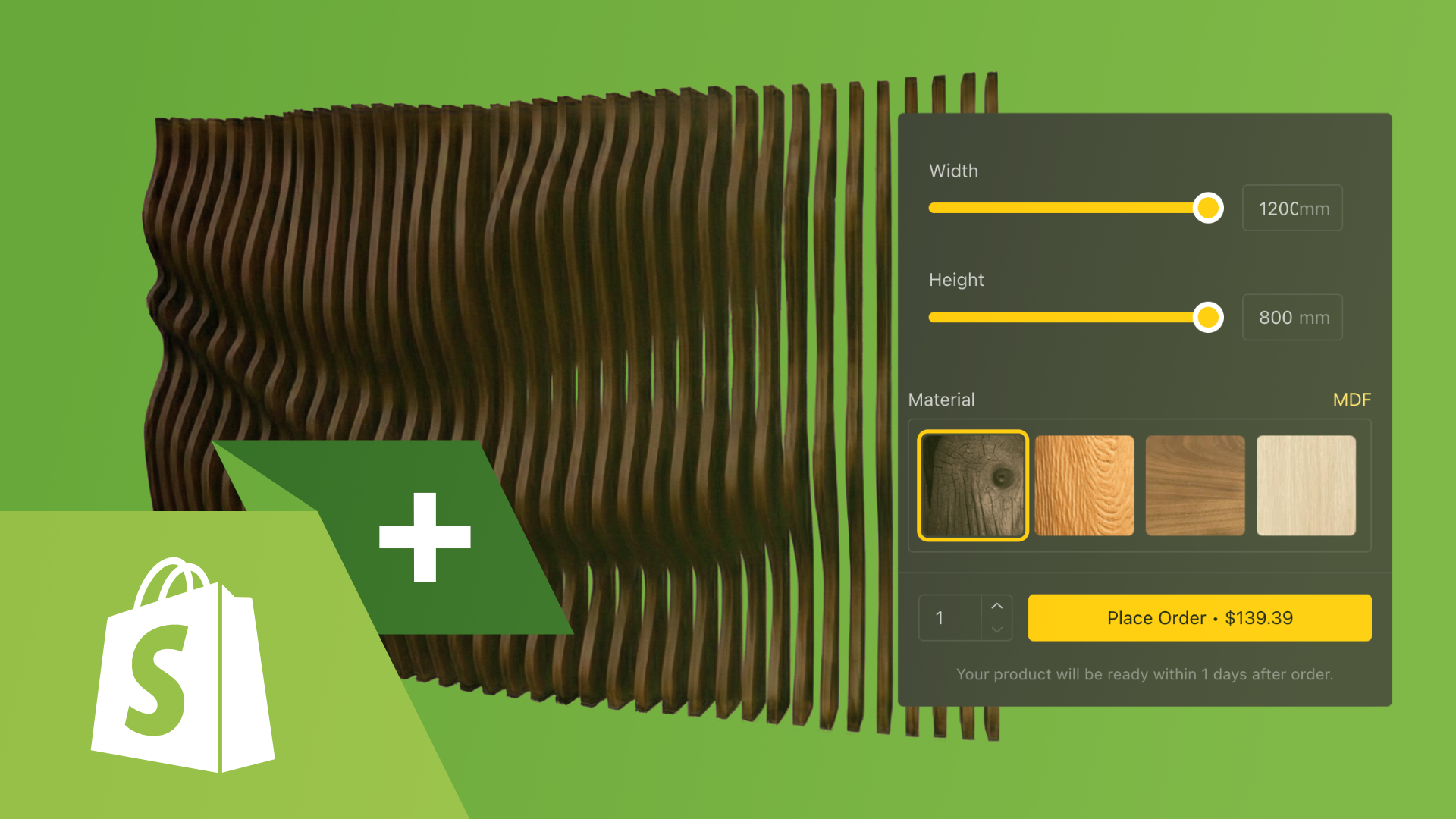
- Shopify: Add the same configurator to your Shopify store via embed code. Customers get the identical configuration experience they would on your direct site, with cart integration that passes selected options and pricing directly to Shopify's checkout.
- WooCommerce: Embed on WooCommerce product pages with the same approach. No WooCommerce-specific plugin limitations — your full configurator runs in the browser alongside your existing store theme.
- Squarespace and Etsy: Marketplace sellers and boutique brands can embed configurators on Squarespace sites and link from Etsy listings, extending the interactive customization experience to platforms that traditionally offer none.
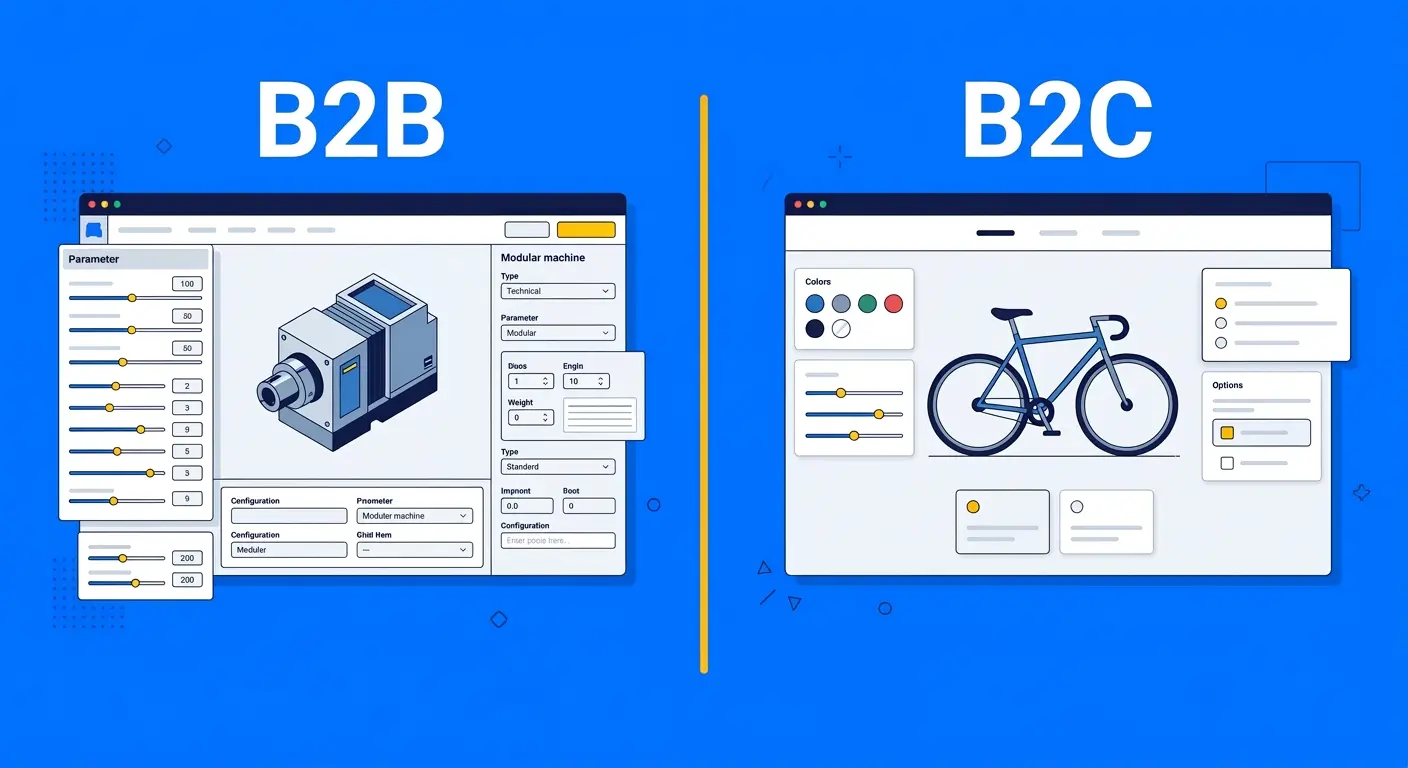
- Sales team quoting tools: Your B2B sales representatives access the same configurator on internal dashboards or dedicated quoting interfaces. They configure products with the customer during calls, generating accurate quotes with identical pricing rules. No more spreadsheet errors or outdated price lists.
- In-store kiosks and tablets: Retail locations run the configurator on touchscreen kiosks or tablets. Showroom visitors can design custom products hands-on, with the same options and real-time pricing they would see online.
- International markets: With multi-language support, the same configurator serves customers in English, German, French, Japanese, Arabic, and any other language — automatically adapting based on locale.
Consistent Pricing and Product Rules Across Every Channel
Pricing consistency is one of the most critical and most frequently broken aspects of multi-channel selling. McKinsey reports that pricing inconsistencies across channels are among the top reasons B2B buyers switch suppliers. When a customer sees one price on your website and a different price through your sales team or on a marketplace, credibility evaporates.
With a centralized configurator, pricing rules live in one place. Material surcharges, volume discounts, dimensional pricing formulas, and promotional adjustments are defined once and enforced everywhere. If you raise the price of a premium finish by 15%, that change takes effect across your website, Shopify, WooCommerce, sales tools, and kiosks simultaneously. Product rules work the same way — if certain material and color combinations are incompatible, that constraint is enforced on every channel, preventing impossible orders before they reach production.
Centralized Analytics: See the Full Picture
When every channel runs the same configurator, all configuration data flows into a single analytics system. You can see which product options are most popular across all channels, where customers drop off in the configuration flow, which channels drive the highest average order values, and how configuration patterns differ between direct customers and marketplace shoppers. This unified view is impossible with siloed, channel-specific tools, and it is essential for making data-driven decisions about product development, pricing strategy, and marketing investment.
BeeGraphy's Omnichannel Embedding: Direct to Every Platform
In December 2025, BeeGraphy — the computational design engine behind Configurator.tech — released a major update enabling direct embedding on Shopify, WooCommerce, Squarespace, and Etsy. This update transforms configurators built on the platform into truly omnichannel tools. A single configurator project can be embedded on any of these platforms with a few lines of code, with no platform-specific rebuilds or plugin dependencies.
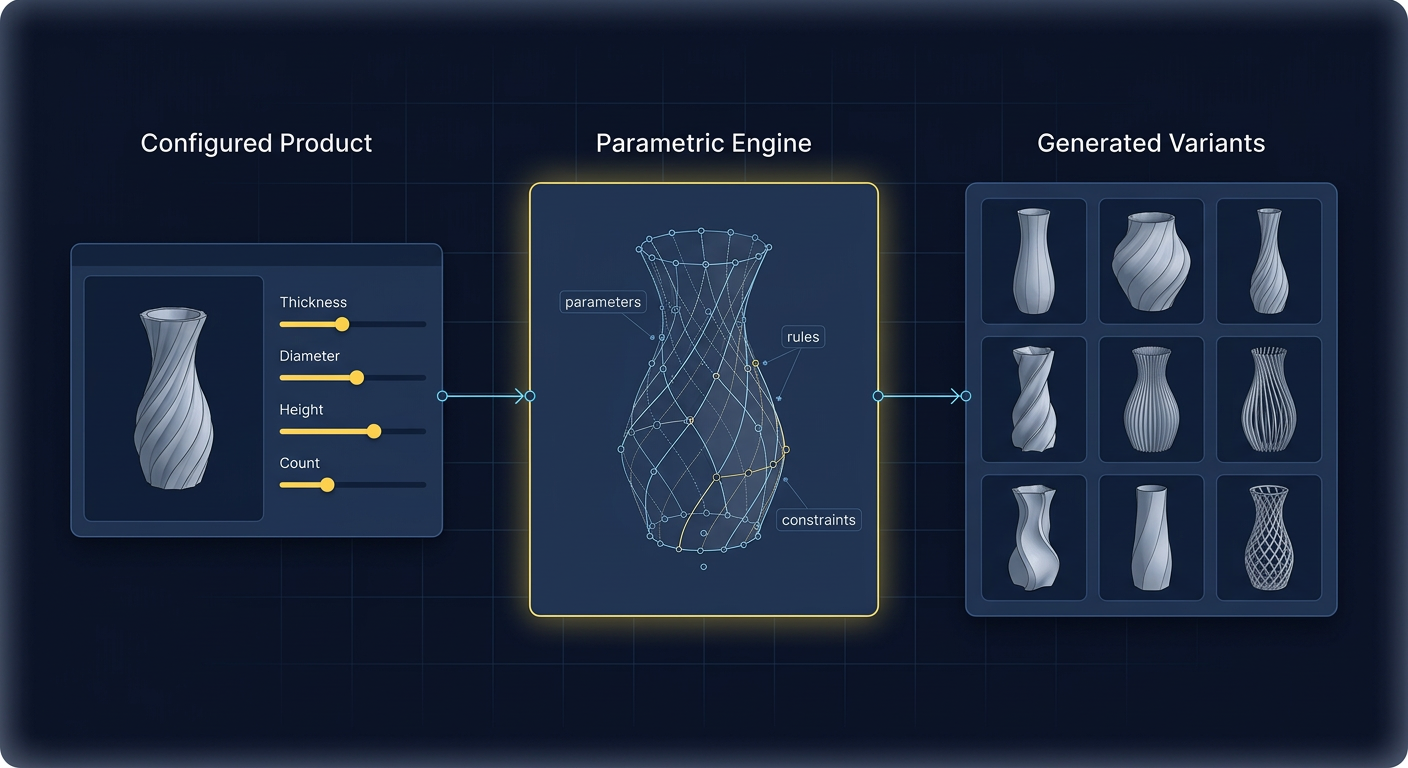
Combined with BeeGraphy's existing capabilities — multi-language support, real-time 3D visualization, parametric pricing engines, and headless commerce architecture — this embedding update means brands can go from a single-channel configurator to a full omnichannel deployment in days rather than months.
Configurator.tech: Your Omnichannel Configuration Platform
At Configurator.tech, we build product configurators designed for omnichannel from day one. Our approach is simple: you define your product once — geometry, materials, rules, pricing — and we give you a configurator that works everywhere your customers are. No duplicate systems, no inconsistent pricing, no siloed data.
Whether you are a furniture manufacturer selling through your website, Shopify, and a network of showrooms, or a jewelry brand spanning Etsy, WooCommerce, and international markets, our pre-built configurator templates and custom solutions deliver consistent, interactive product customization on every channel. The result: higher conversion rates, fewer returns, and a customer experience that builds loyalty regardless of where the purchase happens.
The brands that win in the next decade will not be the ones with the best website or the best marketplace strategy. They will be the ones with the best everywhere strategy. Omnichannel product configuration is how you get there.
Ready to sell everywhere from one platform? Contact us to see how Configurator.tech can power your omnichannel configurator strategy. Explore our pricing plans to get started today.